
In This Article
Updated: 04-13-2026
Why the Right Fountain Pump Matters
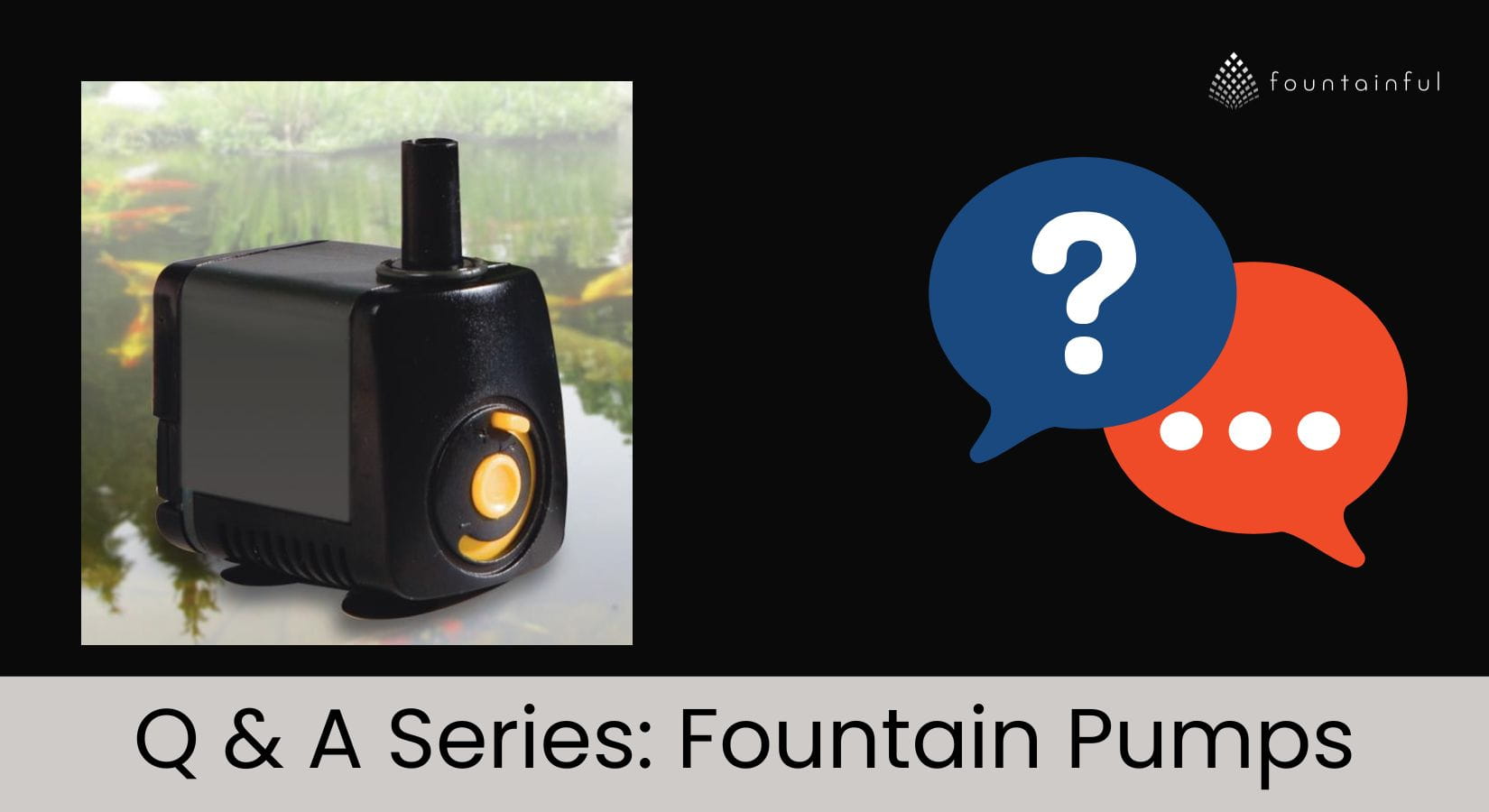
A fountain pump — also called a recirculating pump — is the heart of your water feature, responsible for everything from water flow strength to the sound your fountain makes. Whether you're setting up a new fountain or replacing a worn-out pump, choosing the right one makes the difference between a feature that performs beautifully and one that splashes, sputters, or struggles. Here's what you need to know.
To simplify installation and guarantee optimal performance, every fountain purchased from Fountainful.com comes with the manufacturer-recommended pump included.
How to Choose the Right GPH for Your Fountain Pump
GPH (gallons per hour) indicates how much water the pump moves. Selecting a pump with the correct GPH ensures your fountain functions beautifully.
| GPH Too Low | GPH Too High |
|---|---|
| Weak, flat water flow | Excess splashing & water loss |
| May not fully recirculate water | Can damage fountain finish over time |
A useful starting point: aim for roughly 100 GPH per inch of fountain head height (the vertical distance water travels). A 10" head height, for example, calls for at least a 1,000 GPH pump. Always cross-reference with your fountain's installation guide — and if you've misplaced it, we can look up specs for all brands we carry.
Can You Bury a Fountain Pump's Power Cord?
Yes – but you must encase it within a conduit! Burying a pump’s power cord is a common practice and keeps the landscape looking clean. Most fountain pumps have cords between 6’–15’ with standard 3-prong plugs.
Pro tip: Avoid sharp rocks or areas prone to erosion when burying the conduit, and leave a slight loop in the pump cord at the plug to prevent strain.
Can I Swap My Electrical Pump for a Solar Pump?
Solar pumps work well in limited applications — a simple birdbath in a reliably sunny climate, for instance. For most garden fountains, though, we advise caution.
| Drawback | Details |
|---|---|
| Poor aesthetics | Solar panels must fit within your landscape; cords remain visible. |
| Inconsistent operation | Will not run on cloudy or overcast days. |
| Insufficient output | May require 6–8 hours of consistent sunlight to perform adequately. |
How to Clean a Fountain Pump: Maintenance Tips
Regular maintenance keeps your pump running efficiently. Follow these steps regardless of your pump brand:
- Clean the pump every 1–3 months, depending on algae growth and debris accumulation.
- Disassemble the pump according to instructions and use a small brush (toothbrush or cotton swabs) to remove debris and mineral buildup.
- Use a homemade solution of ½ cup distilled white vinegar per gallon of water for cleaning. Works on pumps and concrete fountain pieces.
For a step-by-step walkthrough of disassembly and cleaning, this video by Massarelli's Fountains covers the full process in under five minutes and applies broadly to most pump styles.
Warranty note: Pump warranties vary by manufacturer. For example, Blue Thumb Mag-Drive pumps carry a 5-year warranty (excluding the impeller). Check the included instructions for details.
Fountainful.com: Your Hassle-Free Shopping Experience

The Sugar Kettle Fountain by Blue Thumb Fountains comes as a complete kit, including the recommended pump.
Every fountain on our site comes as a complete kit, ready for installation. When it comes time to replace your pump, we offer individual pumps for popular brands:
Questions about which pump is best for your water feature? Contact us—we’re happy to help!