
In this article
- Why Choosing the Right Fire Pit Matters
- Consider Your Primary Purpose First
- Choose a Fuel Type That Fits Your Lifestyle
- Smokeless Wood-Burning Models: A Great Middle Ground
- Assess the Size and Layout of Your Outdoor Space
- Think About Materials and Durability
- Evaluate Portability vs. Permanence
- Safety Should Always Be Part of the Decision
- Conclusion
- FAQ
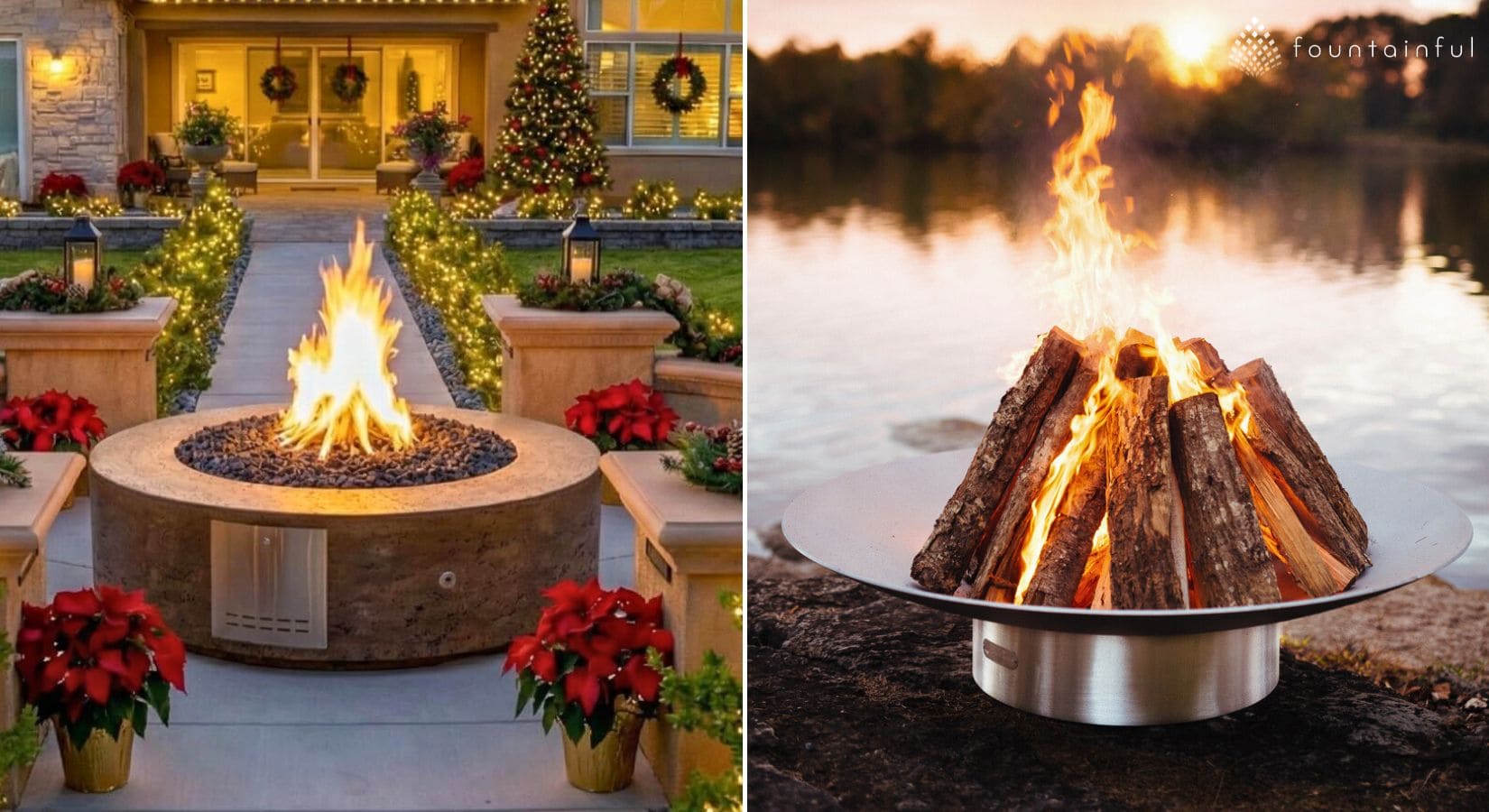
Featured: Florence Round Concrete Gas Fire Pit (L) • Bella Vita Stainless Steel Fire Pit (R)
Updated: 08-21-2026
A fire pit is one of the highest-impact additions you can make to an outdoor space — but with so many fuel types, materials, and sizes on the market, it's easy to get overwhelmed before you've even started browsing. This guide walks through exactly what to consider: fuel type, size, materials, portability, and safety, so you can choose with confidence instead of guesswork.
Fire pits earn their keep most in the cooler months — there's something irresistibly comforting about a warm, glowing fire when the air turns crisp and evenings settle in earlier — but a well-chosen fire pit gets used year-round, not just in autumn and winter. The considerations below apply whether you're buying in July or December.
Why Choosing the Right Fire Pit Matters
A fire pit isn't just an accessory — done right, it becomes the anchor of your outdoor space, the reason people linger outside instead of heading back in. Getting the choice right up front means steady warmth, the right atmosphere, and a piece that holds up for years, rather than a mismatch you're stuck working around.
➤ Planning ahead means more comfort now and long-lasting performance for years to come.
Consider Your Primary Purpose First

Before browsing styles or features, think about what you'll use the fire pit for the most.
Warmth and Heat Output
If your goal is to create a toasty gathering point on chilly nights, heat output should be your top priority. Wood-burning fire pits generally offer the strongest radiant warmth, but certain well-designed gas fire pits can provide steady, controlled heat that's ideal for smaller patios or wind-prone areas.
Ambiance and Aesthetics
Some fire pits are made to be the visual centerpiece with tall flames, sculptural forms, or modern silhouettes that draw eyes even when not in use. Modern steel fire towers, sculptural bowls, or minimalist concrete forms can act as architectural accents even when unlit.
The Comet Steel Fire Tower pictured above offers strong heat projection combined with a dramatic vertical flame and a beautiful Midcentury Modern aesthetic.
Cooking or Multipurpose Use
If roasting, grilling, or warming food is part of your plan, make sure your fire pit is compatible with cooking accessories or offers an open flame structure that allows for safe, stable placement of equipment.
Choose a Fuel Type That Fits Your Lifestyle
Your fuel choice directly affects heat output, convenience, cost, and overall vibe. At a glance:

- Wood-burning: The strongest heat output and the most authentic fire experience — crackling logs, real smoke, a true campfire feel. Best for larger spaces where you don't mind firewood storage and cleanup.
- Propane: Instant ignition, adjustable flame, minimal mess. A great fit for decks, terraces, and smaller patios where convenience matters most.
- Natural gas: Best for permanent, built-in installations — an essentially unlimited fuel supply with no tanks to monitor, at the cost of a fixed installation and the need for a gas line.
➤ For the full pros-and-cons breakdown — including environmental impact, cost comparisons, and how smokeless technology changes the calculus — see our complete Gas vs. Wood Fire Pit Guide.
Smokeless Wood-Burning Models: A Great Middle Ground
If you love the idea of a real wood fire but not the smoke, smokeless wood-burning fire pits are worth a look — they use an engineered airflow or combustion-chamber design to burn far more completely, dramatically cutting visible smoke and odor without giving up the authentic wood-fire experience. ("Smokeless" doesn't mean zero smoke, just dramatically less.) Our Gas vs. Wood Fire Pit Guide covers the technology and environmental comparison in depth — here's what to look for if you're shopping:

-
Double-wall or engineered airflow design for complete combustion
-
Raised fire bowls for airflow beneath the fire
-
Durable materials such as stainless steel, COR-TEN® steel, or GFRC
-
If needed, spark screen compatibility for added safety
Assess the Size and Layout of Your Outdoor Space
A fire pit should feel proportional to its environment, too large and it overwhelms the space, too small and your guests will crowd uncomfortably close.
For patios, decks, or terraces, measure the distance between seating, walls, and walking pathways. People should be able to move around safely without feeling squeezed.
A space prone to wind may benefit from taller, enclosed designs like fire towers, which help keep the flame controlled and visible. These vertical options also cast heat more efficiently outward, which is ideal for winter gatherings.
Once you've chosen your fire pit, our guide to styling a fire pit area covers placement, seating, and lighting in depth to help you build out the space around it.
Think About Materials and Durability
➤ Autumn and winter bring moisture, frost, and rapid temperature changes. Material quality becomes especially important.
Steel
Heavy-duty carbon steel or Corten steel offers excellent durability and often develops a natural patina that enhances its appearance. These designs tend to handle heat well and offer an industrial or contemporary look. For a closer look at specific steel models, see our steel fire pit roundup highlighting creations from Fire Pit Art.
Stainless Steel
More resistant to rust and corrosion, stainless steel fire pits are ideal for areas with snow, rain, and coastal exposure.
Concrete or GFRC (Glass Fiber Reinforced Concrete)

These materials provide a modern look with excellent resistance to weather. They retain heat and remain structurally stable even through freeze-thaw cycles.
Cast Iron
Cast iron radiates heat exceptionally well and can be a great choice for wood-burning models, though it can be quite heavy.
Evaluate Portability vs. Permanence
Portable models are perfect for flexible spaces or smaller patios. You can reposition them depending on wind direction, seating layout, or seasonal needs. They're also easier to store during harsh winter weather.
For homeowners looking to create a defined outdoor gathering space, a permanent fire pit or fire bowl can anchor the design. They're typically more visually impressive and reliable for frequent use, especially when connected to natural gas.

Safety Should Always Be Part of the Decision
When planning any fire pit installation, fire pit safety is as important as atmosphere.
Look for:
-
A stable base that won't tip
-
Adequate ventilation
-
CSA or similar certification for gas models
-
Safe distances recommended by the manufacturer
-
Compatibility with spark screens for wood fires
-
Heat-resistant placement surfaces
Always consider children, pets, and high-traffic pathways when choosing the location and style.
Conclusion
Choosing the right fire pit isn't just about staying warm; it's about shaping the atmosphere, comfort, and flow of every moment you spend outdoors. Whether you prefer the glow of crackling wood, the clean convenience of gas, the neat practicality of a smokeless wood fire, or the dramatic presence of a steel fire tower, the best choice is the one that aligns with your space, your hosting style, and how you actually plan to use it.
A thoughtfully chosen fire pit turns any evening outdoors into something worth lingering for. Contact us today to find your perfect fit!
FAQ
How do I choose a fire pit?
Start with how you'll use it — pure warmth, ambiance, or cooking — then work through fuel type (wood, propane, or natural gas), the size of your outdoor space, material and durability, and whether you need something portable or permanent. Safety features like a stable base and proper ventilation should factor into the decision at every step, not just as a final check.
What size fire pit do I need?
Measure the space you have for seating, walkways, and clearance first — a fire pit should feel proportional to its surroundings, with enough room for people to move around comfortably without crowding. Wind-prone spaces often do better with a taller, more enclosed design like a fire tower rather than a wide, low bowl.
Is a wood-burning or gas fire pit better?
Neither is universally better — wood offers the strongest heat and the most authentic fire experience but requires more maintenance and fuel storage, while gas offers instant, clean, low-maintenance convenience at the cost of some ambiance. See our full Gas vs. Wood comparison for a detailed breakdown.
Are smokeless fire pits worth it?
If you want the authentic feel of a wood fire without the eye-irritating smoke drifting toward guests or neighbors, yes — smokeless models use engineered airflow to burn much more completely. They cost more than a basic wood-burning pit, but for anyone in a shared-living or suburban setting, the reduced smoke and odor are usually worth it.
What's the most durable fire pit material?
Stainless steel and COR-TEN® steel both hold up exceptionally well outdoors — stainless resists rust and corrosion best in wet or coastal climates, while COR-TEN® develops a protective natural patina. Concrete and GFRC are also excellent choices, remaining structurally stable through freeze-thaw cycles.