
In this article
- Step 1: Choose Complementary Styles and Materials
- Step 2: Plan Layout and Visual Flow
- Step 3: Integrate Plant Selection
- Step 4: Consider Water & Maintenance Logistics
- Step 5: Highlight with Lighting and Accessories
- Step 6: Plan for Professional Installation (Optional)
- Bringing It All Together
- Frequently Asked Questions
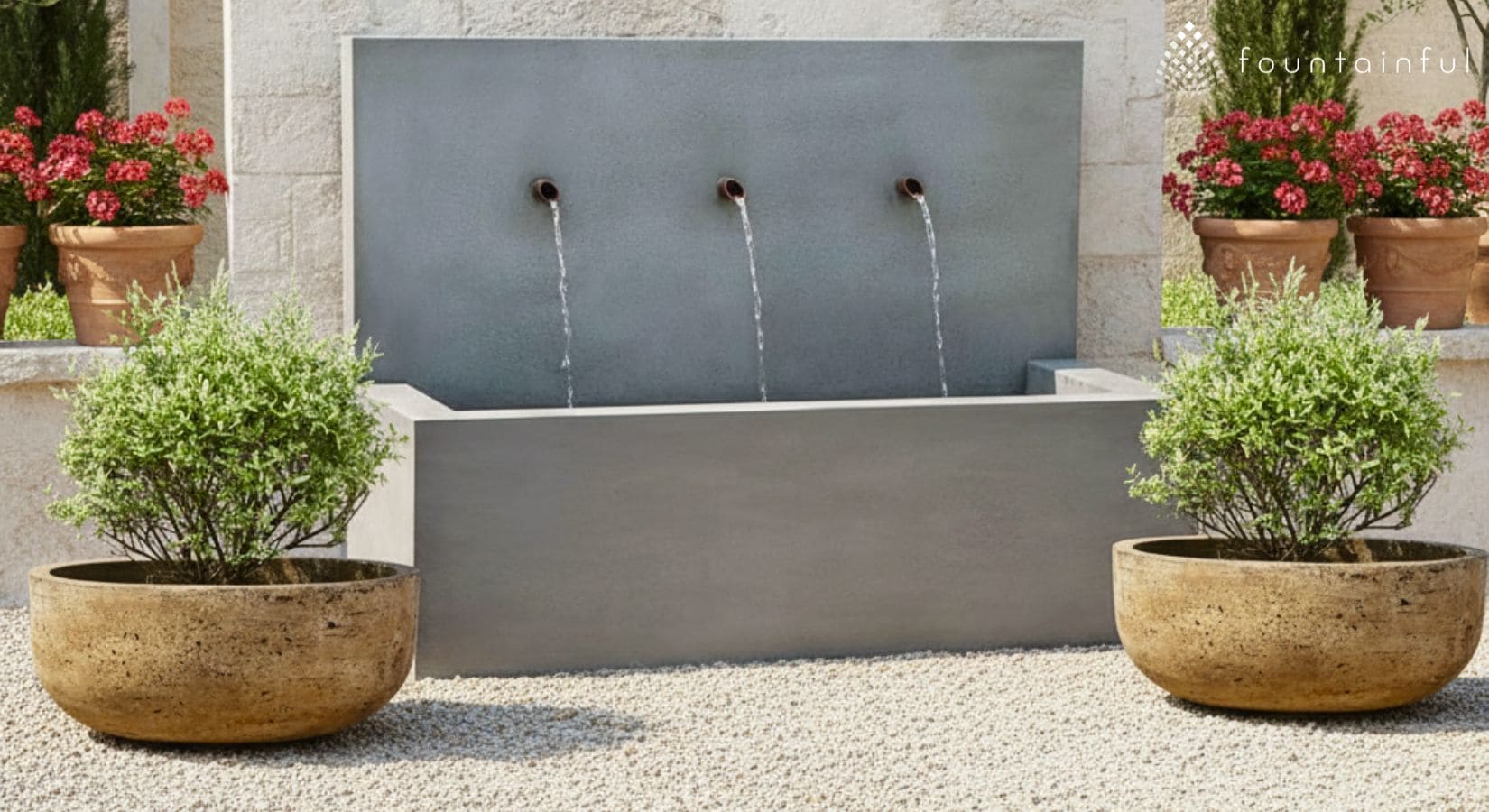
Featured Image: Long Beach Wall Fountain with Mesa Planters (foreground)
Updated: 08-20-2026
Fountains and planters are more than just decorative pieces; when combined thoughtfully, they transform outdoor spaces into vibrant, inviting environments.
A well-designed composition achieves visual balance by allowing the fountain to serve as the central focal point while planters — and the potted plants inside them — frame or complement it with shape, height, and color. The interplay of textures adds depth, as the flowing motion of water contrasts beautifully with the solidity of the planters, creating a sense of both movement and stability.
Beyond aesthetics, this combination supports biodiversity. Planters introduce greenery that attracts pollinators, while fountains provide a water source for birds and other wildlife, enriching the ecosystem around them. Whether you're designing a luxury residential garden or a commercial courtyard, uniting these two elements ensures your space feels cohesive, functional, and full of life.
Step 1: Choose Complementary Styles and Materials
The foundation of great design begins with harmony. Coordinating the style, material, and finish of your fountain and planters sets the tone for the entire space.
Consider:
-
Material: Concrete, GFRC, basalt, and metals like COR-TEN® steel offer both durability and aesthetic flexibility, perfect for modern, industrial, or classical environments.
-
Finish: Pigmented-through concrete planters maintain consistent color and resist chipping, blending seamlessly with fountain bases or surrounding hardscapes.
-
Shape & Scale: Tall, slender planters can elegantly frame a large central fountain, while low-profile planters highlight smaller water features.
Pro Tip: For expansive commercial spaces, heavyweight cast stone planters offer the additional benefit of barrier protection, ideal for municipality landscape projects.
Design Inspiration: Try pairing a smooth concrete fountain with rectangular GFRC planters in matching tones for a clean, architectural look.
Step 2: Plan Layout and Visual Flow

shown here: Triple Falls GFRC Boulder Fountain
Creating visual harmony is about balance, proportion, and movement.
-
Symmetry vs. Asymmetry: Formal spaces benefit from symmetrical arrangements, while asymmetrical groupings add energy and natural flow.
-
Pathways & Access: Ensure fountains and planters enhance, not obstruct, walkways and gathering areas.
-
Focal Points: Position the fountain as the visual anchor, with planters strategically placed to guide the eye or soften hard edges.
Pro Tip: Use planters to define pathways or frame sightlines that lead toward the fountain, encouraging exploration through the space.
Step 3: Integrate Plant Selection

shown here: Bamboo Concrete Fountain by Fiore Stone
Plants bring motion, texture, and color that change with the seasons.
Consider:
-
Height variation: Combine tall ornamental grasses with cascading groundcovers for layered visual interest.
-
Seasonal appeal: Mix plants that offer different bloom times, foliage textures, or colors for a space that feels dynamic year-round.
-
Wildlife-friendly choices: Opt for flowering species that attract pollinators, or shallow water-tolerant plants near the fountain to support birds and beneficial insects.
What to Plant in Pots Around a Fountain
A few reliable combinations for potted plants around a fountain, depending on the effect you want:
- Structure: Boxwood, dwarf conifers, or small ornamental shrubs give planters year-round shape even when nothing is in bloom.
- Softening the edges: Trailing plants like sweet potato vine or creeping jenny spill over a planter's rim, blurring the hard line between planter and hardscape.
- Shaded courtyards: Ferns and hostas thrive in the cooler, humid microclimate a fountain naturally creates nearby.
- Movement that echoes the water: Ornamental grasses sway in the breeze in a way that visually rhymes with the fountain's motion.
Bonus Idea: Incorporate a small bird bath or basin into one of the planters—adding sound, movement, and a natural connection between water and plant life.
Design Inspiration: Picture a basalt fountain surrounded by lush ferns and sedges, creating a calm, forest-like retreat.
Step 4: Consider Water & Maintenance Logistics
Functionality is key to ensuring your outdoor design remains beautiful and low-maintenance over time.
-
Drainage: Choose planters with proper drainage holes or weep channels to prevent standing water and root rot.
-
Irrigation integration: Connect planters to a drip irrigation system for consistent watering and minimal upkeep.
-
Circulation & Cleaning: Fountains with self-contained pumps and filtration systems keep water fresh and clear, reducing algae buildup.
Pro Tip: Eco-friendly algaecides and routine cleaning extend your fountain's lifespan while maintaining a pristine look.
Step 5: Highlight with Lighting and Accessories

Lighting transforms your fountain and planters from day features to nighttime showpieces.
-
Fountain lighting: Use spotlights or submerged LEDs to create shimmering reflections and movement.
-
Planter lighting: Install uplights within or behind planters to accentuate plant textures and silhouettes.
-
Finishing touches: Pebbles, decorative stones, or mulch unify the visual palette and tie in with the fountain's materials.
Tip: Choose low-voltage, energy-efficient LED options for sustainability and safety.
Design Inspiration: Soft uplighting behind tall planters can cast sculptural shadows that mirror the fountain's rippling surface.
Step 6: Plan for Professional Installation (Optional)
For larger or more complex projects, professional expertise ensures precision, safety, and visual impact.
-
Installation: Heavy concrete or stone planters may require mechanical lifting for placement.
-
Plumbing & Electrical: Pumps, filters, and lighting systems should be installed by qualified professionals.
-
Compliance: In public or commercial settings, planters and fountains may need to meet structural or accessibility standards.
Professional Tip: Landscape architects often pair Fountainful's steel planters with modern architectural fountains for flexible, modern, and durable outdoor designs that meet both aesthetic and performance goals.
Bringing It All Together

shown here: Torino 2-Tier Fountain
When form and nature meet, outdoor spaces truly come alive. The combination of handcrafted fountains and architectural planters transforms any setting into a multi-sensory experience, blending sound, movement, and life.
Fountainful's collection of fountains and planters is designed to work beautifully together, helping you create cohesive, enduring designs for residential gardens, public spaces, or commercial landscapes.
Explore our fountain collection and commercial planters to start designing your perfect outdoor space today. If you're still deciding on a planter style, our guide to outdoor concrete planters compares Modern, Classic, Animal, and Mediterranean styles — and for large-scale commercial or municipal projects, see our Commercial & Architectural Planter Collection guide.
Frequently Asked Questions
What materials work best when combining fountains and planters?
Durable materials like GFRC, cast stone concrete, and COR-TEN® steel provide both longevity and a consistent aesthetic across elements.
What potted plants look good around a fountain?
Boxwood and dwarf conifers add year-round structure, trailing plants like sweet potato vine or creeping jenny soften a planter's edges, and ferns or hostas do well in the cooler, shaded microclimate near a fountain. Ornamental grasses are also a favorite, since their movement in the breeze visually echoes the motion of the water.
Can I use fountains and planters in smaller spaces?
Yes, compact fountains paired with narrow or corner planters can bring life and movement even to patios or entryways.
How do I maintain both features easily?
Choose planters with proper drainage, pair them with drip irrigation, and select fountains with built-in pumps for low-maintenance upkeep.