
In this article
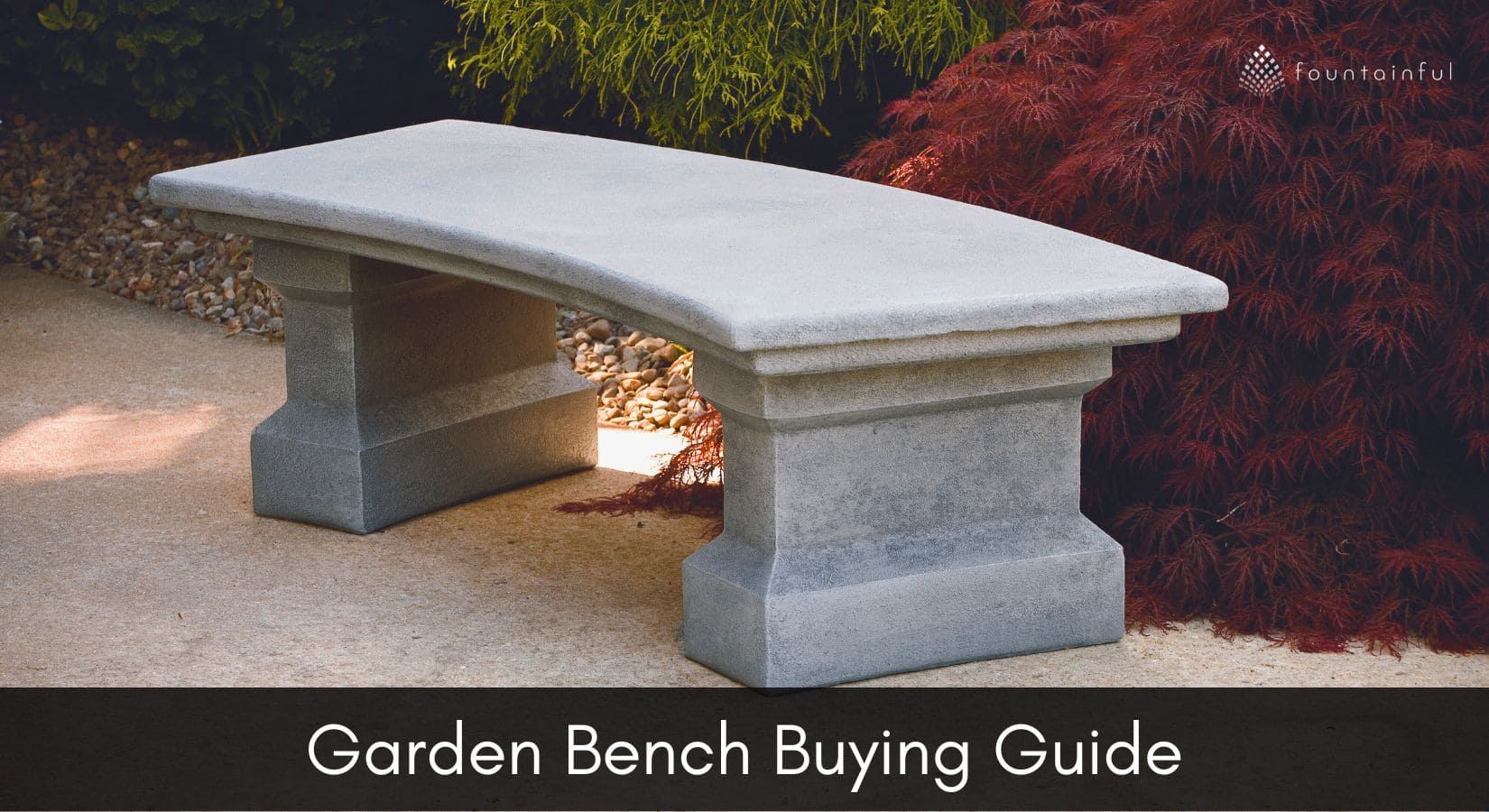
Featured Image: Classic Curved Concrete Garden Bench by Massarelli
Updated: 07-06-2026
A garden bench is one of the few outdoor pieces that's both fully functional and purely decorative at the same time. It gives you somewhere to sit, and it gives your garden a focal point — even on the days nobody's sitting on it.
But "garden bench" covers a lot of ground: cast concrete or natural stone, curved or straight, ornate or minimal, four feet or seven. This guide walks through how to narrow that down, so you land on a bench that fits your space, your style, and how you actually plan to use it.
Here's what we'll cover:
- How concrete and natural stone benches compare;
- Which style fits your garden's personality;
- How to size and place a bench so it actually gets used; and,
- How to keep it looking good for decades.
Concrete vs. Natural Stone: Choosing Your Garden Bench Material
Before you fall in love with a design, it's worth understanding the two main materials a garden bench is built from — because they behave differently, look different up close, and land at different price points.
Cast Stone Concrete Benches

The Cumberland Concrete Garden Bench by Campania shows off the crisp detail cast stone concrete makes possible.
Most of the benches in our collection — from Massarelli's, Giannini Garden Ornaments, Campania International, and Fiore Stone — are hand-cast from reinforced concrete, then finished with a hand-applied stain. This is what makes intricate details possible: sculpted scrollwork, grapevines, animal figures, and clean architectural lines that would be difficult to achieve in raw stone.
A few things to know about cast concrete benches:
- Widest range of styles, from ornate Mediterranean designs to minimalist modern slabs.
- Custom color finishes — most brands offer a full palette of stains, plus a "Natural" unstained option.
- Ships in sections on many designs (commonly 2–6 pieces), which makes delivery and final placement more manageable.
- Generally the more accessible price point of the two materials, with plenty of options under $1,000.
Natural Quarried Stone Benches
Blue Thumb hand-cuts garden benches directly from natural basalt, granite, and onyx, sourced as quarried rock rather than poured and molded. Each piece is genuinely one of a kind — no two benches share the exact same veining, coloring, or texture.
- No two alike: natural color variation and mineral veining make every bench unique.
- No staining required — the color is the stone itself, so there's no finish to touch up over time.
- Exceptionally heavy and stable, which also makes it highly resistant to tipping or shifting.
- A more architectural, minimalist look — think clean-cut slabs rather than sculpted detail.
➤ Quick take: if you want ornamentation, sculpted detail, or a specific color, go concrete. If you want a one-of-a-kind natural statement piece with a low-maintenance finish, go stone.
Find Your Style: Garden Bench Design Themes
Once you've settled on a material, the next question is style. Here's how our most popular garden benches break down by design theme.
Classic & Mediterranean
The Venetian Garden Bench by Fiore brings an Old World gargoyle motif to your garden.
This is the most crowded category, and for good reason — nearly every brand we carry offers a take on the traditional European garden bench:
- Giannini Garden Ornaments: the Villa Antinori and Italian Garden Bench feature sculpted grapevines, scrollwork, and classical column legs.
- Campania International: the Traditional Curved Bench and Curved West Chester Bench offer a slightly more American-heritage take on the same clawfoot-and-scrollwork tradition.
- Fiore Stone (Al's Garden Art): the Venetian Curved, Venetian Straight, and Bench of Nobility lean into more dramatic sculpted figures and clawed legs — the Bench of Nobility is even two-sided.
Modern & Contemporary
If your outdoor space leans clean and architectural, look to Giannini's Moderna or California garden benches, both built around simple leg-and-slab silhouettes and tasteful two-tone finishes. Campania's Biscayne Bench takes a similarly streamlined approach with a substantial four-piece pedestal design. Blue Thumb's natural stone benches also read as contemporary, thanks to their minimal, unornamented profile.
Rustic & Nature-Inspired

Massarelli's Timber Concrete Garden Bench is cast to look like naturally weathered wood.
Massarelli's design team specializes in benches that mimic organic textures — like the Timber bench's convincing weathered-wood texture — while Blue Thumb's natural Basalt and Mountain Wave Granite benches deliver the real thing: authentic, hand-hewn quarried rock. For a botanical touch, Campania's Curved Leaf Bench is sculpted with leaf and foliage reliefs, and Fiore Stone's Four Seasons Bench is cast to look like weathered cobblestone peeking through the surface.
Whimsical & Animal Motifs

Realism meets whimsy in the Horned Toad Garden Bench by Phoenix Precast
Want your bench to be a conversation piece? Our Animal Garden Bench collection includes sculpted horse, lion, turtle, dolphin, and horned toad designs — a playful option for gardens that don't take themselves too seriously. Nature-lovers might prefer something a bit subtler: Campania's Dragonfly Curved Bench is sculpted with cattails and dragonflies in flight, and Fiore Stone's Four Seasons Bench features a flower, sun, maple leaf, and snowflake worked into the seat — one motif for every season.
Choosing the Right Size & Placement

With a seat spanning 4 feet, the Neo Classic Concrete Garden Bench by Campania comfortably seats 1-2 people.
Garden bench seat lengths typically run anywhere from about 4 feet (room for one or two) up to 6+ feet (room for two or three). A few questions to work through before you buy:
- How many people should it seat? A single-person accent bench and a 6-foot conversation bench serve very different purposes — measure the space with that in mind.
- What will it face? Placing a bench so it looks back at your garden bed, water feature, or a favorite tree turns it into a designated spot to actually enjoy your landscaping, not just walk past it.
- Will it double as a focal point? A bench at the end of a path or centered against a hedge line reads as a destination, even when no one's sitting there.
- How will it be delivered and placed? Most concrete benches ship on a pallet in multiple sections, which two people can typically maneuver into position without equipment. Solid stone benches are considerably heavier and placement should be planned before delivery.
➤ Pro Tip: pair your bench with a stepping stone path leading up to it — it reinforces the bench as an intentional destination rather than an afterthought.
Why Add a Garden Bench? The Everyday Benefits
Beyond the design considerations, a garden bench earns its place for a few practical reasons:
- A dedicated spot to slow down — coffee, a book, a journal, or just a few minutes away from a screen.
- Space-efficient seating — one long bench often takes up less visual and physical space than several separate chairs.
- A natural gathering point for guests during backyard get-togethers, especially when paired with cushions or throw pillows.
- Built to last — both cast concrete and natural stone are heavy, weather-resistant materials that hold up season after season, and are resistant to tipping from wind or wildlife.
Caring for Your Garden Bench
Both materials are built for outdoor life, but a little routine care keeps them looking their best:
- Rinse periodically with a garden hose to clear dust, pollen, and debris.
- Use a soft brush and mild soap for stuck-on grime — avoid pressure washers on close range, which can wear down a stained finish over time.
- Keep a touch-up stain on hand for cast concrete benches, in case of minor chips or scuffs from moving or weather.
- Natural stone needs the least upkeep — since the color is the stone itself, there's no finish to maintain.
- Expect a natural patina over time — most cast stone finishes are designed to mellow and deepen with weather exposure, which is part of the material's charm rather than a flaw.
Shop Garden Benches at Fountainful
Our garden bench collection features handcrafted designs from Giannini Garden Ornaments, Massarelli, Campania International, Fiore Stone, and Blue Thumb — with styles ranging from classical Mediterranean to natural stone to playful animal designs.
Browse the full Garden Bench Collection and find the piece that fits your space.
FAQ
How much does a garden bench weigh?
It varies widely by design and material — cast concrete benches typically range from about 200 to 800+ pounds, while natural stone benches can weigh considerably more given the density of solid rock. Most concrete benches ship in multiple sections to make handling easier.
Are concrete garden benches weatherproof?
Yes. Cast stone concrete is designed for permanent outdoor placement and holds up through rain, sun, and freeze-thaw cycles. The color finish may mellow with age, which is expected and part of the material's natural patina.
Can I leave a garden bench outside all year?
Both cast concrete and natural stone benches are built to stay outdoors year-round in most U.S. climates.
What's the difference between "Natural" and a stained color finish?
"Natural" means the concrete is left unstained — straight from the mold and lightly buffed. A stained finish applies one of the brand's designer colors to enhance the sculpted detail.
Do garden benches need a foundation or base?
Most garden benches can sit directly on a level, stable surface like packed soil, gravel, or a patio. For extra stability — especially with lighter or multi-section designs — a paver base or concrete pad is a good option.
Have questions about choosing the right garden bench? We're here to help! Contact us.