
In This Article
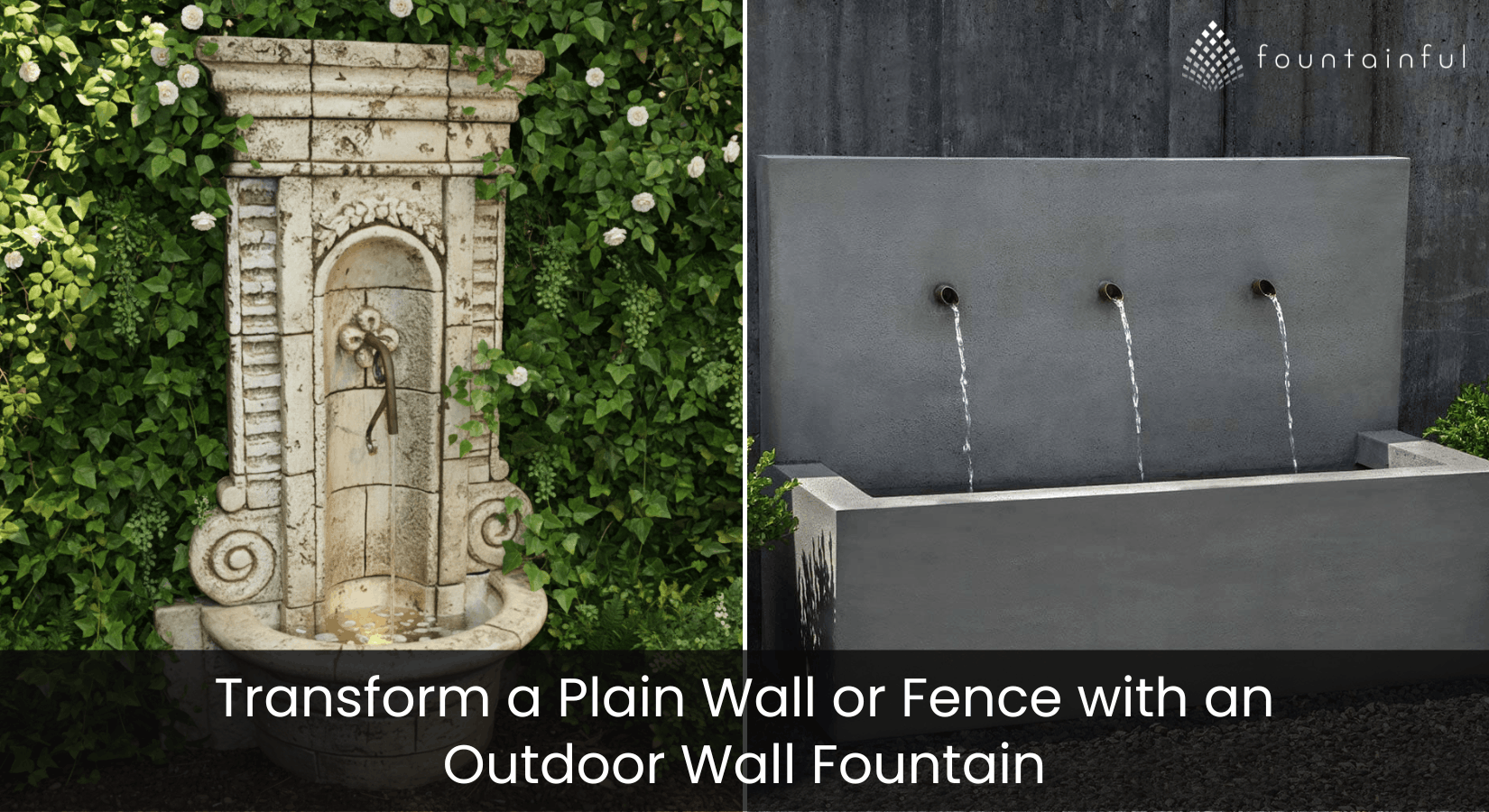
Featured Images (from left): Champagne Wall Fountain / Long Beach Wall Fountain
Updated: 04-17-2026
Wall fountains have a rich history across Europe and the Mediterranean — appearing on churches, castles, and landmarks like Rome's Quattro Fontane — and their appeal has carried seamlessly into contemporary outdoor design. Unlike freestanding fountains, wall fountains feature a flat back that mounts flush against walls, fences, and columns, making them one of the most versatile water features available. They're equally at home in a compact urban courtyard or a sprawling estate garden. Whether you're working with a blank stucco wall, a wood fence, or a stone column, here's how an outdoor wall fountain can elevate the space.
Motion & Life for an Empty Space

Outdoor walls and fences are among the most underused design surfaces in a garden or patio. A wall fountain introduces vertical movement and the sound of running water without consuming any floor space — a major advantage in smaller yards, courtyards, or side yards where a freestanding fountain simply isn't practical.
Available from Fountainful in cast stone concrete, wall fountains can complement nearly any architectural style, from Mediterranean-inspired courtyards to clean-lined modern patios. The Avignon Wall Fountain picture above, for example, brings a classic European sensibility to garden walls.
Turning Blank Walls into Focal Points

An outdoor wall or fence is often functional but visually flat. The right wall fountain transforms that surface into an architectural accent — something guests notice immediately.
Design variety here is significant. Some fountains feature multiple spillways, scuppers, or tiered bowls for layered water movement. We love how the Vizcaya Wall Fountain by Fiore Stone combines a classical tiered fountain with a wall style! Planter-style options like the Moderno Planter Fountain by Fiore combine flowing water with live greenery to soften hard surfaces and add color. For modern or contemporary spaces, sculptural pieces like Campania's M Weave Large Wall Fountain add visual interest even when the water is off.
When it comes to sizing, a general rule of thumb: the fountain face should occupy roughly one-third to one-half of the wall width it anchors. Too small and it gets lost; too large and it overwhelms the space.
Using Water Sound to Reduce Street and Neighbor Noise

One of the most practical — and often underappreciated — benefits of a wall fountain is noise masking. A well-placed fountain near a seating area can meaningfully soften the intrusion of street traffic, neighbor activity, or HVAC noise.
Rain curtain designs are particularly effective for this purpose. Paradise Falls, for instance, produces a steady, consistent sheet of falling water that creates broad-spectrum moderate sound coverage — effective for masking certain nose and also providing a visual barrier. A wall fountain example with excellent noise masking is the Brentwood Double.
Wall placement matters too: positioning the fountain between you and the noise source, and as close to your seating area as practical, maximizes the masking effect.
➤ For a deeper look at sound output by fountain style, see our fountain sound guide.
Safety Considerations
Wall fountains should always be securely anchored according to manufacturer guidelines — masonry anchors for concrete or stucco walls, appropriate hardware for wood fences. Children and pets should never climb on fountains, even when not in operation. Placing your fountain away from high-traffic walkways helps ensure long-term, worry-free enjoyment.
Choosing the Right Wall Fountain


What to Consider Before You Buy
- Material: Cast stone and concrete offer the most authentic, weathered look and hold up well in most climates. Resin is lighter and easier to mount. Metal finishes (copper, bronze) develop a natural patina over time that many homeowners love.
- Size: Measure your wall width before shopping. As a starting point, the fountain face should span roughly one-third to one-half the width of the wall it anchors.
- Water sound: Spillway and rain curtain designs produce the most consistent sound. Single-spout or bowl designs tend to be subtler.
- Power source: Most wall fountains require a nearby outdoor GFCI outlet. Factor cord length and outlet proximity into your placement decision.
Fountainful carries outdoor wall fountains from trusted makers including Giannini, Campania, Fiore, and Massarelli — in styles ranging from classic cast stone to contemporary metal and resin. Browse the full Outdoor Wall Fountain Collection or contact us if you'd like a recommendation for your specific space and wall type.