
In this article:
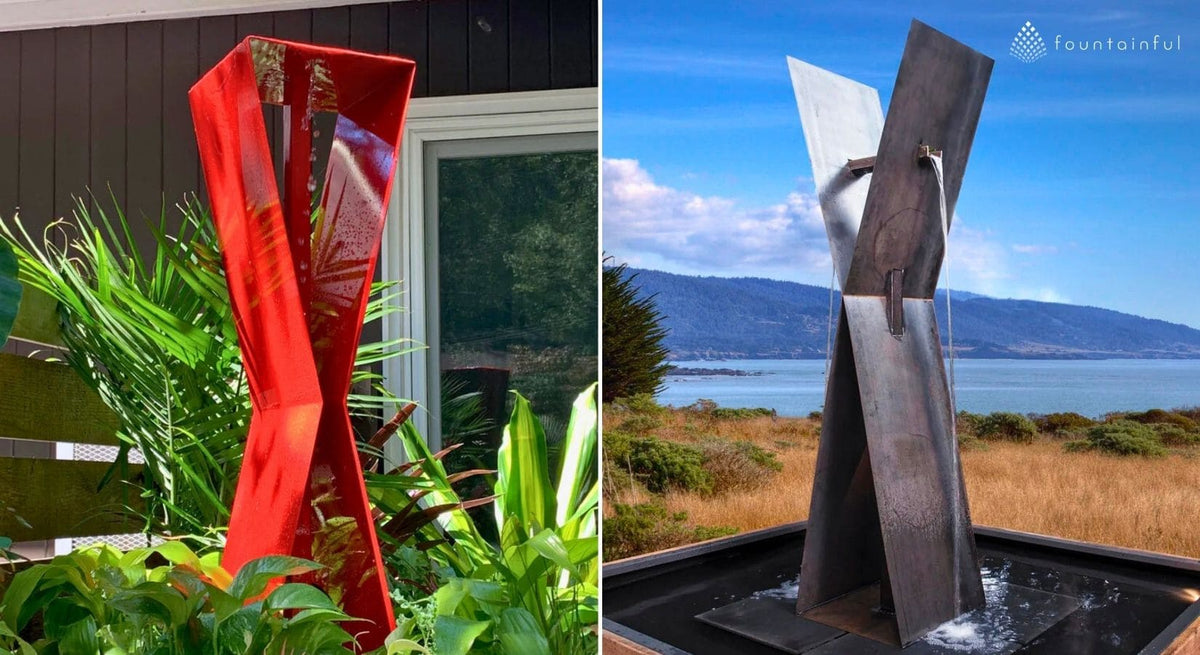
Featured Image: X2 Mini Mod Steel Fountain (L) • X1 Modern Steel Fountain (R)
Updated: 08-20-2026
Balance is one of the simplest yet most powerful design principles. It's what turns an outdoor space from something ordinary into something that feels peaceful, intentional, and complete. Water, in particular, has an incredible way of bringing that sense of harmony to life—its movement, sound, and reflection effortlessly transforming any setting.
At Fountainful, we've seen how sculptural, architectural water features inspired by Mid-Century Modern design can redefine both private gardens and public spaces. They're not just decorative pieces, they're living art that connects people to nature and to the calm rhythm of flowing water.
Let's explore how you can bring that beauty of balance into your own contemporary landscape.
Key Takeaways
- Balance is timeless: Modern water features blend structure and softness, bringing serenity to both residential and public spaces.
- Design with purpose: Clean lines, natural materials, and thoughtful placement create harmony in contemporary landscapes.
- For professionals and dreamers alike: Whether you're an architect, landscaper, or homeowner, a sculptural fountain can elevate your design and invite people to connect.
- Simple, beautiful, enduring: Fountainful's modern fountains combine art, sound, and motion to create outdoor spaces that feel alive and unforgettable.
- Every budget welcome: Alongside large-scale commercial pieces, the Mini Mods bring the same architectural design language to residential spaces at a fraction of the cost.
Mid-Century Modern Principles in Architectural Water Feature Design
Mid-century modern design has always been about simplicity, clean lines, and a deep connection with the natural world. It celebrates form and function working together—a philosophy that translates beautifully into architectural water features and outdoor spaces.
In these settings, the goal is not to dominate nature, but to frame it. Every element, whether it's stone, steel, or water, has a purpose and a place. That's why water features fit so naturally within this design style. They soften hard edges, introduce motion, and add a soothing sensory layer that balances structure with life.
Fountainful Tip
If your garden features geometric shapes or modern architecture, look for fountains with strong, simple forms, like rectangular basins or vertical water walls, to echo that clean, linear beauty.

Sculptural Water Features as Modern Art
A modern fountain is more than a statement piece, it's an experience. When sunlight dances on moving water or you hear that gentle ripple in the background, something shifts in how the space feels. It becomes alive.
Think of a sculptural fountain as functional art — a compelling architectural element that interacts with its surroundings, changing with the light, the weather, and the viewer's perspective. Materials like Corten steel or stainless steel are especially popular because they age gracefully, developing natural character that complements both modern and organic landscapes.
In a small courtyard, a single sculptural fountain can create a striking focal point. In larger public and urban spaces, a series of water features can tie together open plazas and walking paths, guiding people through a landscape with both sound and sight.
Bringing Balance to Every Type of Landscape
In a private space, a modern fountain adds serenity and sophistication. Imagine stepping into your backyard and hearing the gentle flow of water; instantly calming, instantly grounding. Whether you prefer a minimalist design surrounded by concrete and grasses or a lush, green retreat, the right fountain anchors everything in harmony.
Fountainful Tip
Place your fountain where you can enjoy both the look and the sound, near a seating area, patio, or visible window. The gentle sound of water not only soothes the mind but also helps mask street noise and create a private escape.
Video Feature: K2 Fountain in COR-TEN® Steel
Commercial and Urban Outdoor Spaces
For business owners, developers, contractors, or designers, architectural water features add lasting value to commercial and urban properties. A sculptural fountain in an office courtyard encourages people to linger and recharge. At hotels or retail centers, it becomes a visual landmark—a cue that says, this is a space designed with care.
Modern materials make installation easier and maintenance simpler, so these features remain beautiful and functional for years in high-traffic urban settings.

Designing for Professionals
When it comes to large-scale projects, modern water features do more than decorate a space—they define it. For architects, landscape designers, contractors, and builders, sculptural fountains offer a dynamic way to merge art and infrastructure, turning outdoor environments into destinations.
Incorporating architectural water features into your design plans can help achieve multiple goals at once:
- Visual cohesion: The clean lines and geometric forms of modern fountains complement contemporary materials.
- User engagement: Movement and sound invite people to pause, interact, and stay longer—a valuable quality for public areas like museums, outdoor malls, and mixed-use developments.
- Environmental function: Many designs can be configured for sustainability, using recirculating systems and durable materials suitable for high-traffic spaces.
Municipalities and public planners are also rethinking how water can enhance urban community spaces. A well-placed fountain offers sound, light, and movement that humanize even the most structured urban environments. Whether installed at a city park entrance, an office courtyard, or a civic plaza, water features add emotional warmth and aesthetic continuity to the built environment.
Fountainful Tip
When specifying fountains for public projects, consider flow rate, splash zone, and accessibility. These technical details ensure that the design remains inviting, safe, and easy to maintain for years to come.
Public Installations and Shared Spaces
In public areas like museum courtyards, glass-walled lobbies, parks, and civic plazas, architectural water features invite connection. People naturally gather near water to talk, rest, or simply pause for a moment — often near sculptural bench seating positioned to take in both the sound and the view. A well-designed modern fountain can transform an open plaza into a destination, offering movement and sound that humanize urban landscapes.
Fountainful Tip
When designing for shared spaces, scale and proportion are key. Choose pieces that harmonize with the architecture and create gentle interaction without overwhelming the surroundings.
Mini Mods: The Same Design, A Smaller Scale

Not every project calls for an 8-foot commercial installation — and not every budget allows for one. That's exactly what the Mini Mods are for. These are true Randy Bolander pieces, signed by the artist, built at a residential-friendly 36" tall in durable stainless steel — the same architectural design language as the large-scale MODFountain collection, scaled down for a patio, courtyard, or garden bed.
Four Mini Mod designs are currently available, each named after the full-size sculpture it's modeled on:
- X1-Mini Modern Stainless Steel Fountain
- X2-Mini Modern Stainless Steel Fountain
- X3-Mini Modern Stainless Steel Fountain
- X4-Mini Modern Stainless Steel Fountain
Each Mini Mod ships with everything needed to run it — a submersible pump, hose, pipe, and control valve — and is easy to assemble without professional installation. It's the same clean, geometric sensibility that defines the full-size collection, just sized and priced for a residential patio rather than a civic plaza.
A Resource for Professionals
If you're an architect, landscape designer, contractor, or municipal planner, architectural water features offer a practical way to elevate a project. Their sleek forms complement materials like concrete, glass, and steel, while their modular construction allows for flexibility in installation.
They're durable, low-maintenance, and adaptable to almost any setting, from rooftop terraces to urban parks. More importantly, they reinforce your design intent. A well-placed fountain doesn't just enhance a space, it completes it.
Fountainful Tip
When collaborating with clients, use water features as conversation pieces. Ask what mood they want to create—calm and meditative, or dynamic and energizing—and choose a design that mirrors that intention.

The Benefits of Balance in Outdoor Design
A well-designed water feature contributes to balance in multiple ways:
- Aesthetic Harmony: Fountains introduce structure and softness at the same time, uniting hardscapes and plant life.
- Sensory Experience: The sound of water naturally reduces stress and helps mask ambient noise, making any environment feel more peaceful.
- Environmental Value: Fountains can help regulate microclimates, attract wildlife, and introduce gentle movement into still spaces.
Beyond the visual and sensory benefits, water features change how people use a space. They draw people in. They encourage reflection, conversation, and relaxation, all elements that create memorable environments.

Bringing the Vision to Life
At Fountainful, we're inspired by the philosophy of balance; that perfect meeting point between artistry and purpose. Designer Randy Bolander's Mid-Century Modern influence lives in every clean line and every subtle curve. His fountains aren't just made to be seen; they're made to be felt.
Whether you're designing a tranquil home garden or a vibrant public plaza, architectural water features bring something intangible but unmistakable: a sense of calm, connection, and timeless beauty.
Fountainful Tip
To make your water feature stand out, integrate lighting. A soft glow beneath the surface or gentle uplighting transforms it into a focal point that feels magical after sunset.
Conclusion
There's a reason water features have endured across centuries of design—they remind us to slow down, to listen, to reconnect.
At Fountainful, we believe in balance: between art and function, stillness and motion, nature and design. Whether you're dreaming up a private garden or designing a public plaza, our architectural, Mid-Century Modern fountains bring that timeless harmony to life.
Explore our MODFountain collection today and discover how the gentle rhythm of water can completely transform the way your space feels.
FAQ
What are architectural water features?
Architectural water features are fountains designed with the clean lines, geometric forms, and structural intentionality of architecture itself — rather than the ornamental, decorative style of traditional garden fountains. They're built to function as sculpture first, water feature second, and are commonly used in both residential landscapes and commercial or public design projects.
What makes a fountain "Mid-Century Modern"?
Mid-Century Modern fountains emphasize simplicity, clean geometric lines, and a lack of ornamentation, letting the form and the movement of water speak for themselves. Materials like Corten and stainless steel are common choices, since they age with visible character while keeping the overall silhouette minimal.
What are the best options for visually appealing fountains designed for urban landscapes and public areas?
For urban and public spaces, look for architectural pieces with strong, simple geometric forms that read clearly from a distance — sculptural steel fountains, rectangular basins, and vertical water walls tend to work best. They should also be durable, low-maintenance, and specified with flow rate, splash zone, and accessibility in mind, since public installations see far more foot traffic and weather exposure than a residential garden.
Are MODFountain pieces available in smaller, more affordable sizes?
Yes — the Mini Mods (X1, X2, X3, and X4) bring Randy Bolander's architectural, Mid-Century Modern design language to a residential-friendly 36" scale at under $2,000 each, a fraction of the cost of the full-size commercial pieces. Each ships with everything needed to install and run it. Browse the Mini Mods here.
What materials are used in architectural water features?
Corten (weathering) steel and stainless steel are the two most common materials for architectural fountains. Corten develops a natural rust-toned patina over time, while stainless steel keeps a clean, reflective finish. Both are chosen for durability and low maintenance in outdoor and high-traffic public settings.